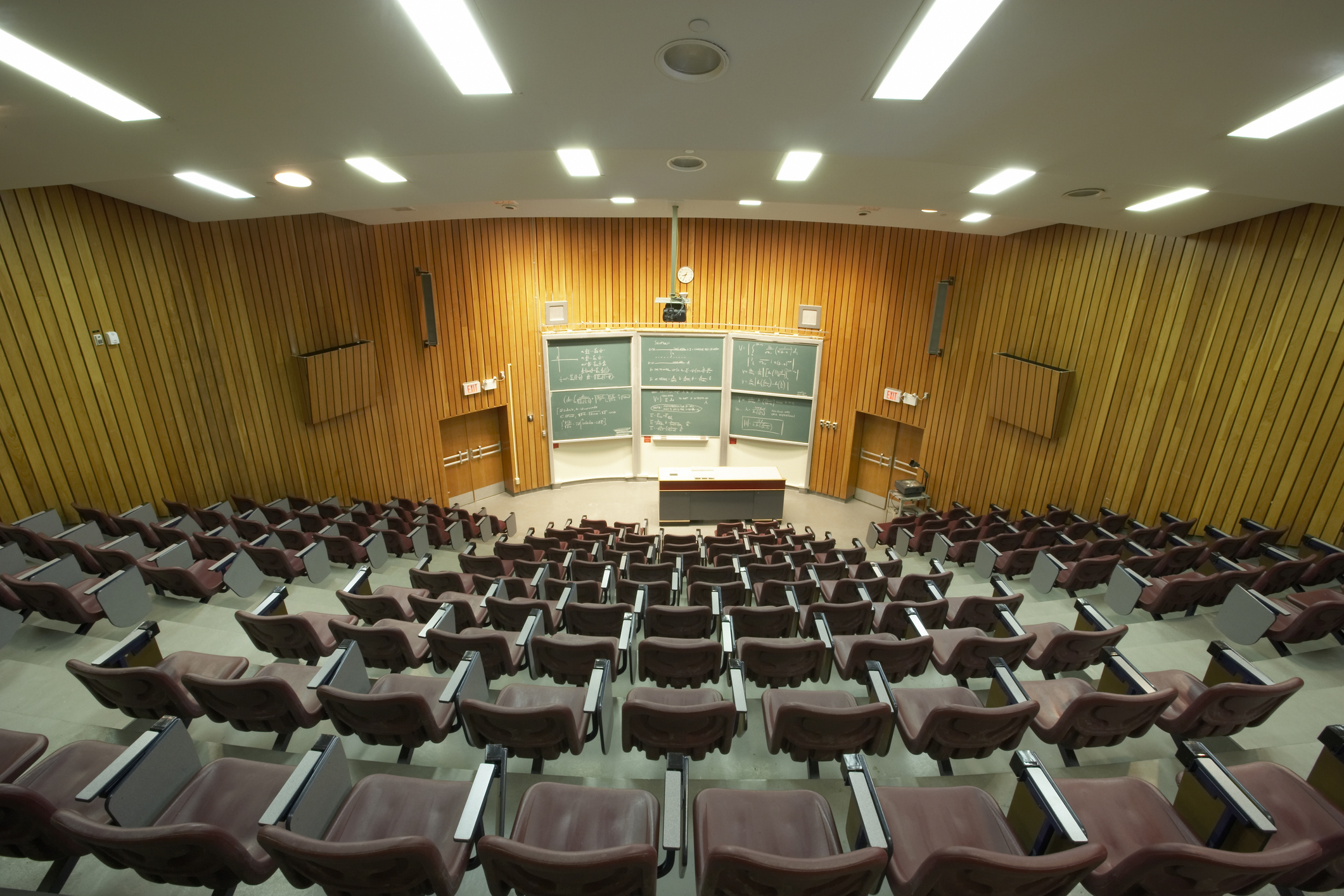
COVID-19 affected a school term in which over the course of just seven days, institutions and instructors pivoted towards remote learning within the context of a global emergency. All the carefully constructed syllabi and years of curriculum suddenly shifted fully online as dormitories closed, lectures and discussions turned to Zoom, and assessment, too, went digital.
Thoughtful planning--which was impossible in the face of a global emergency remote learning experimentOpens in a new tab/window--is now possible. While the “Pandemic Term” revolved around short-term goals that prioritized safety and completing learning for the semester, 2020-2021 planning will inform how learning takes place in ensuing semesters and likely act as a precedent for how higher education proceeds. We want to provide insights on how to plan for the upcoming terms and beyond and offer a snapshot of what education at higher education institutions might look like in the coming term.
So, what is the education landscape going to look like? And what are the factors that will contribute to outcomes?
Let’s first examine the pressures at hand, some of which compete against each other.- Financial Strain
-
Christina Paxson, the President of Brown University, published an op-ed in The New York Times stating “the reopening of the college and university system in the fall shouldOpens in a new tab/window be a national priorityOpens in a new tab/window.” This opinion opens with the financial impacts of COVID-19 on higher education and the loss of student tuition. Paxson states, “This loss, only a part of which might be recouped through online courses, would be catastrophic, especially for the many institutions that were in precarious financial positions before the pandemic. It’s not a question of whether institutions will be forced to permanently close, it’s how many.”
The response to Paxson’s statement was mixedOpens in a new tab/window, but it made very clear the urgent financial situationOpens in a new tab/window institutions currently face in the face of declining tuition income, declining international student enrollmentOpens in a new tab/window, and other declining subsidies
- Safety
-
Safety is an oft-discussed priority. Michael J. Sorrell, President of Paul Quinn College, prioritizes safety over financial worries in his article in The AtlanticOpens in a new tab/window, stating, “if a school’s cost-benefit analysis leads to a conclusion that includes the term acceptable number of casualties, it is time for a new model.”
Faculty concerns mirror this opinion. A Chronicle of Higher Education poll shows that 80% of higher education instructors are not comfortable returning to work in the FallOpens in a new tab/window of 2020. Instructor responses include, “My university is only truthful when it serves their profit margin” and “I’m afraid my choice will come down to either losing my position or being forced to work in dangerous conditions.” This hesitation is echoed in the K-12 realm, where 20% of instructors refuse to return to their classroomsOpens in a new tab/window if schools reopen for in-person instruction in the coming semester--Fall 2020 in North America. Students too, are unsure about whether they will attend higher educationOpens in a new tab/window in the new academic year; 20% may take a gap year and defer admissionOpens in a new tab/window (thereby affecting an institution’s tuition income), uncertain both about safety and financial stability. For residential programs, housing needs will change.
- Education
-
A university’s product is the transfer of knowledge. How will such knowledge transfer take place, particularly in residential programs in the context of social distancing? Students don’ t find remote learningOpens in a new tab/window as gratifying as in-person instructionOpens in a new tab/window and are hesitant about remote learning in higher education. In a Harvard Business Publication Education webinar entitled “COVID-19’ s Impact on the Future of Higher EducationOpens in a new tab/window,” Vijay Govindarajan states, “COVID-19 has given a death blow to American higher education, because the very thing that American higher education prides itself, which is social connection, is what COVID-19 attacks...Universities provide a way for youngsters to transition into a career. Of course, these youngsters learn from great teachers but they also learn from each other. They learn about themselves, about camaraderie, their identity, conflict resolution, emotional intelligence, and creative problem-solving.”
Social connections must balance safety in residential programs. Upholding education is equally important for an institution’s financial wellbeing, as teaching, the sole source of institutional revenue, subsidizes research.
Now let’s take a look at what higher education may look like in 2020-21 and beyond. Institutions are doing their best, as they poll students and prepare for a multi-year impactOpens in a new tab/window, to address the above concerns and decide whether or not to reopen campus.
The decision to reopen, at first glance, seems bifurcated:Opens in a new tab/window either campus will open or campus will deliver education via remote learning. In the Chronicle of Higher Education’s ongoing survey of over 800 schoolsOpens in a new tab/window, 68% stated they planned in-person instruction for Fall 2020 as of the end of May. Only 7% committed to online instruction. But the reality is that even open campuses will still offer some online options and include a hybrid approach.
Many scenarios involve a compromise between open and online learning as higher education moves toward long-term goals of financial stability, refined remote learning, and safety policies.
Upcoming 2020 term solutions include:- Enhanced use of technology in instruction
-
- Offering different modes of instruction: students might have choices between in-person, hybrid, and completely online/remote instruction so they can build a curriculum that works best for their personal comfort.
- Increased use of digital technology to support social distancing, such as videoconferencing tools, feedback tools, and assessment tools.
- Offering training on educational technologyOpens in a new tab/window for both faculty and students.
- Increased access to hardware and internet connectivity to uphold equity and enable all students to access courses remotely.
- Remote learning may enable academic luminaries to teach without relocation and create opportunities for guest speakers.
- Adjustments to the academic calendar
-
- Changing term dates: schools may start earlier in order to end terms by holidays and avoid the peak of flu season.
- Class meeting times may be staggered to manage student population on campus.
- Final exams may be held virtually.
- Health protocols for employees and students
-
- Reconfiguration of residential halls and classroom sizes to minimize health risks.
- Offering COVID-19 testing on campuses.
- Distancing within dormitories.
- The use of unconventional spaces, such as outdoor tent structures, for instruction
- Limiting students to only freshmen on campusOpens in a new tab/window, according to NPR: “The idea centers on research that shows just how important a student's first year of college is as a predictor of graduationOpens in a new tab/window. Adapting to campus can be a challenge, so this would allow first-year students to get comfortable and have extra support on campus.”
- Investment in digital technology
-
- Investment in online programs may reach a new population of students and diversify revenue: Develop high-quality MOOC courses and accelerate plans for adopting digital technology to uphold student learning outcomes via refined assessment.
- Student support
-
- Gather student feedback and redesign courses and technologies in a student-centered way.
- Hiring and retention
-
- Increase remote work for staff and faculty. Consider the possibility of hiring or retaining academic luminaries otherwise unavailable for in-person instruction or guest-speaking opportunities.
Whatever the scenario of an institution in 2020-2021, the landscape of higher education remains a complex tapestry of competing pressures, goals, and strategies. Every setback is an opportunity for change; what is important is that discussions about goals and priorities are taking placeOpens in a new tab/window. This moment, while challenging, is a pivotal moment that is causing educators to re-examine traditions and rewrite the future of higher education for the better.